


Details
- Maker•Studio Ford
- Medium•Fibre
- Origin•USA
- Composition•100% percale cotton, stitched with cotton thread
- Dimensions•Throw: 1270 x 1780mm
- Care •Dryclean Reccomended.
Description
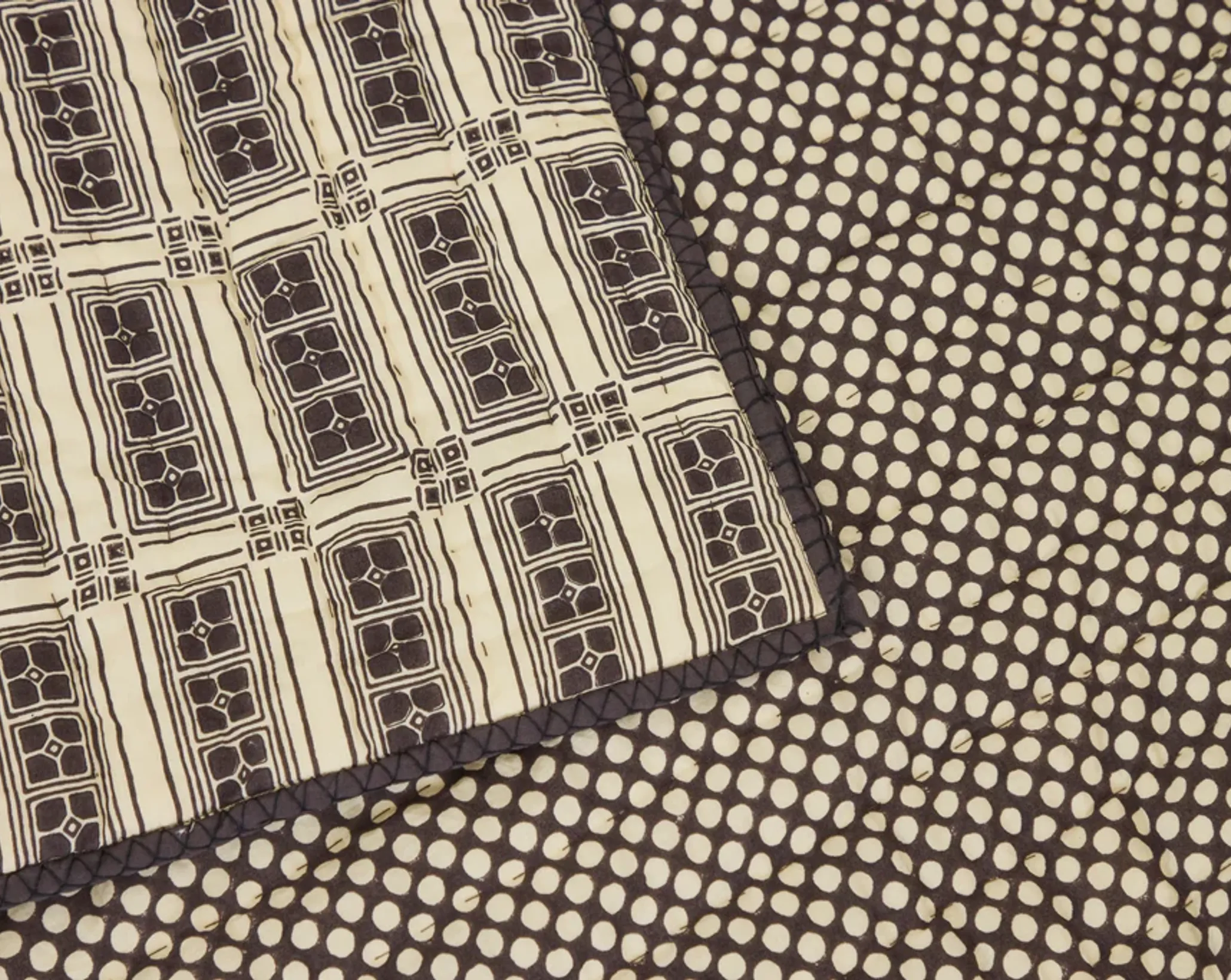
The Vesuvius Throw by Studio Ford takes its name from the iconic volcano overlooking the Bay of Naples. Block printed in black against a soft cream ground, the pattern evokes the mineral qualities of stone and ash, creating a striking interplay of depth and contrast.
Entirely handmade over many months, each throw is block printed on crisp percale cotton and filled with natural cotton batting. The layers are then meticulously hand-stitched using a traditional unknotted running-stitch technique, creating a subtle texture that reflects the rhythm and skill of the maker's hand. The result is a textile of remarkable character, tactile and expressive.
Part of Studio Ford's Tesserae collection, the pattern draws from a diverse range of influences, from the motifs of traditional Indian sarees to the geometry of the Vienna Secession and the ornamentation of Pompeian frescoes. Like the tesserae of a mosaic, these references are thoughtfully assembled into a cohesive whole.
Designed in California and crafted in Jaipur, India.
Shipping
Please refer to our shipping page for rates and delivery time frames.
- 【50】Studio Ford


Preserving the art of hand-block printing through timeless textiles.
STUDIO FORD is a Los Angeles-based textile atelier dedicated to preserving the heritage craft of Indian block printing. Founded in 2017 by Josie Ford—an art historian and printmaker—the studio brings a thoughtful, art-informed approach to contemporary textile design.
Rooted in botanical and geometric observation, Studio Ford’s patterns are designed in California and brought to life in close collaboration with skilled artisans in Jaipur, India. Each textile is hand-printed using traditional wood blocks and produced in small batches, reflecting a commitment to slow, intentional craftsmanship.
Timeless and tactile, every piece from Studio Ford carries the warmth of the hand and the spirit of cultural exchange—honouring both process and place.

